
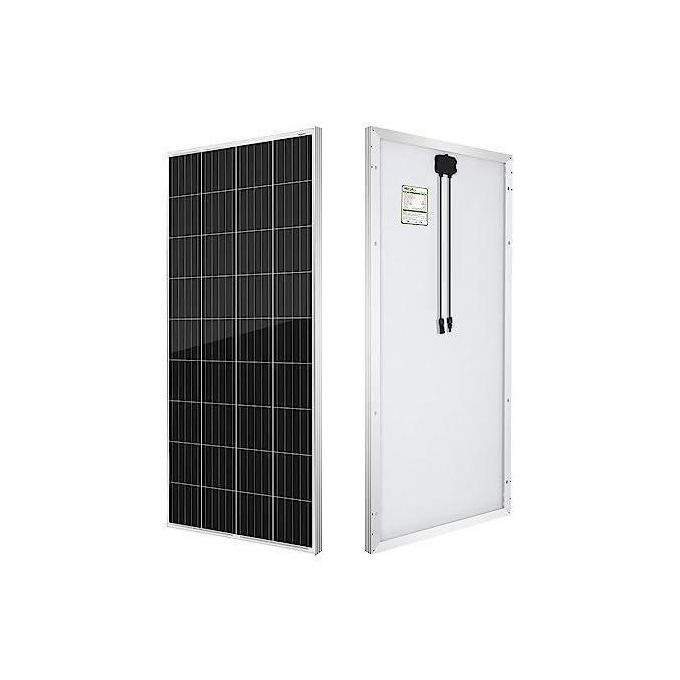
300W (Watt) Solar Panel
KSh10,000.00
| Electrical Parameter | Standard STC Value |
| Peak Power Capacity ($P_{max}$) | 300 Watts (Wp) |
| Voltage at Max Power ($V_{mp}$) | ~32.2V to 32.6V |
| Current at Max Power ($I_{mp}$) | ~9.1A to 9.3A |
| Open Circuit Voltage ($V_{oc}$) | ~39.5V to 39.9V |
| Short Circuit Current ($I_{sc}$) | ~9.5A to 9.9A |
| Module Efficiency Rate | 18.3% to 18.5% |
A 300W (Watt) Solar Panel represents a definitive sweet spot for off-grid configurations, residential solar arrays, telecommunication stations, and portable power setups. Generating significantly more energy than legacy 100W–200W units, a single 300W panel offers a highly efficient power-to-footprint ratio.
📋 Technical Specifications (Standard 60-Cell Config)
Most modern 300W residential and light-commercial modules use high-density 60-cell (or 120 half-cut cell) alignments yielding the following standardized ratings:
| Electrical Parameter | Standard STC Value |
| Peak Power Capacity ($P_{max}$) | 300 Watts (Wp) |
| Voltage at Max Power ($V_{mp}$) | ~32.2V to 32.6V |
| Current at Max Power ($I_{mp}$) | ~9.1A to 9.3A |
| Open Circuit Voltage ($V_{oc}$) | ~39.5V to 39.9V |
| Short Circuit Current ($I_{sc}$) | ~9.5A to 9.9A |
| Module Efficiency Rate | 18.3% to 18.5% |
Note: Legacy 72-cell variations of 300W panels exist but operate at a higher voltage (~37V $V_{mp}$ / ~45V $V_{oc}$) and have a larger physical footprint.
Physical & Structural Metrics
-
Dimensions: Approx. $1640 \times 992 \times 35\text{ mm}$ ($64.5 \times 39 \times 1.37\text{ inches}$)
-
Total Weight: ~18 kg to 20 kg (39.6 to 44 lbs)
-
Chassis Frame: Corrosion-resistant anodized aluminum alloy (available in silver or black)
-
Glass Panel Shield: 3.2mm anti-reflective, low-iron tempered safety glass
-
Output Interface: IP67/IP68 weather-sealed junction box containing 3 bypass diodes, terminated with 4mm² cables and industry-standard MC4 connectors.
🔬 Choosing Monocrystalline vs. Polycrystalline
-
Monocrystalline 300W (Recommended): Constructed using premium uniform single-crystal silicon structures (identifiable by their distinct solid black shade). They offer higher cell efficiency (18%+), meaning they can reach a true 300W output in a smaller physical space and perform better during overcast or low-light conditions.
-
Polycrystalline 300W: Formed by melting multiple raw silicon crystals together (identifiable by a marbled blue texture). They are generally more economical but require a larger footprint to match the same wattage, dropping the module footprint efficiency down to ~15%.
⚡ Power Output Expectation & Practical Use
Assuming a regional baseline of 4.5 hours of peak direct sunlight per day, a single 300W solar panel produces roughly 1,350Wh (1.35 kWh) of usable DC electricity daily.
This daily generation budget is perfect for handling:
-
High-efficiency DC or AC refrigerators/freezers.
-
Off-grid cabin utilities (LED lighting fixtures, ceiling fans, Wi-Fi router systems).
-
Medium-draw shallow well water pumps or agricultural irrigation systems.
-
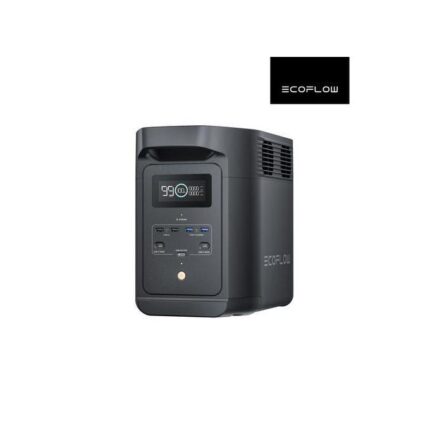
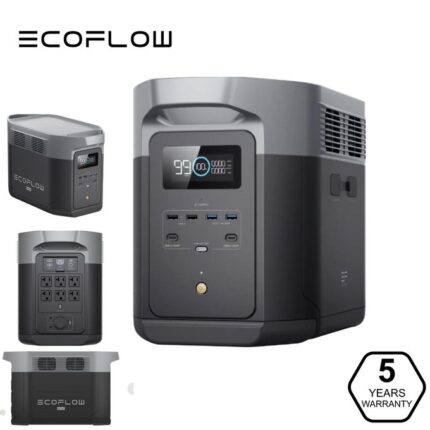
Fast-charging large portable solar generator power stations (like Bluetti, EcoFlow, or Jackery).
System Connection Rule: Since a 300W panel natively generates roughly 32V ($V_{mp}$), you cannot hook it up directly to a standard 12V or 24V battery bank. Doing so will severely throttle the power or cook the cells. You must route the lines through a specialized MPPT (Maximum Power Point Tracking) Charge Controller to efficiently step down the high voltage into an optimized charging current.


Reviews
There are no reviews yet.