
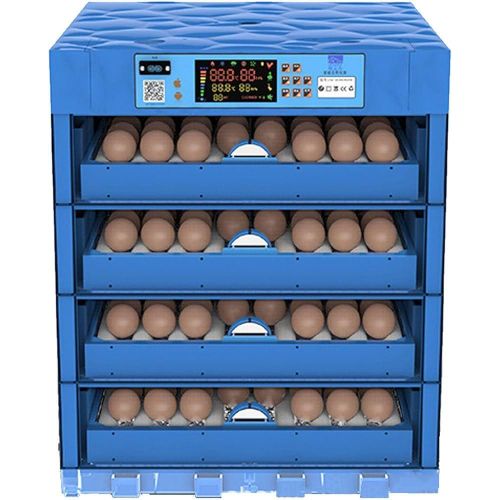
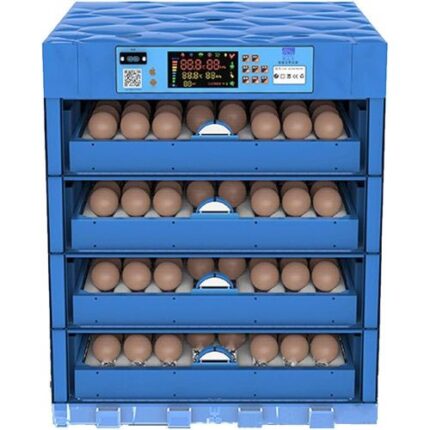
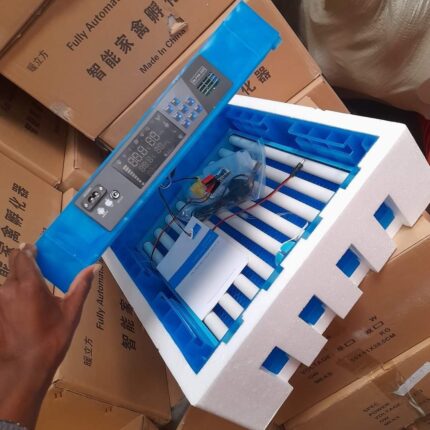
256 Eggs-Automatic AC/DC Incubator
Original price was: KSh26,500.00.KSh22,499.00Current price is: KSh22,499.00.
Key Specifications
While features can vary slightly by importer, these are the standard technical specifications for most 256-egg automatic units available in the market:
| Feature | Specification |
| Capacity | 256 chicken eggs (varies for duck, quail, or turkey) |
| Power Rating | 80W – 110W (energy-efficient) |
| Power Supply | Dual-mode: AC (Main Electricity) + DC (12V Battery/Solar) |
| Turning System | Automatic roller system (rotates every 2 hours) |
| Temperature Control | Digital PID controller (30°C – 39°C range) |
| Humidity Control | Automatic or semi-automatic via water channels |
| Construction | Insulated hard plastic with steel reinforcement |
| Display | LED digital screen for temperature/humidity/countdown |
| Safety Features | High/low-temperature and humidity alarms |
Why These Specs Matter
-
AC/DC Dual Power: This is the most critical feature for local conditions. It ensures the incubator can switch to a battery or solar source during power outages, preventing embryo death.
-
Roller Turning System: Unlike older “tray-tilt” designs, the roller system is generally more versatile for different egg sizes (like quail vs. chicken) and requires less maintenance.
-
Insulation: The build material is designed to hold heat during short power cuts, which is vital for maintaining the stable climate required for a high hatch rate.
A 256-egg incubator is a mid-sized, automatic incubation system commonly used by small-to-medium-scale poultry farmers in Kenya. It strikes a balance between professional output and affordability for those moving beyond small “starter” machines.
Key Specifications
While designs vary by brand, most 256-egg units in the Kenyan market share these core technical specs:
-
Capacity: 256 chicken eggs (capacity may vary if hatching smaller eggs like quail or larger ones like duck/turkey).
-
Power Efficiency: Typically rated at 80W–110W. Most modern models are designed for low power consumption.
-
Power Flexibility: Most are Dual-Power (AC/DC), meaning they can switch between standard electricity and a backup battery (12V) or solar power, which is critical for protecting embryos during power outages.
-
Automation:
-
Egg Turning: Fully automatic roller systems that rotate eggs every 2 hours.
-
Temperature & Humidity: Digital PID controllers for precise, automated regulation.
-
-
Construction: Usually made of durable, easy-to-clean plastic or metal cabinet frames
What to Look For Before Buying
When selecting a unit, consider these factors to ensure you get value for your money:
-
“Setter & Hatcher” Configuration: Check if the unit has separate trays or sections. Some models are “combined,” while others require you to transfer eggs to a dedicated hatcher tray in the final 3 days.
-
Power Backup/Dual Function: Given power instability in many areas, ensure your unit has reliable AC/DC terminals. Some high-end local models even include an integrated voltage stabilizer or “fridge guard.”
-
Build Quality & Insulation: Look for machines with thick walls or good insulation. This preserves internal conditions for several hours during a power cut.
-
Cleaning Ease: The unit should be easy to dismantle for “deep cleaning” after each hatch. Hygiene is the number one factor in preventing bacterial growth that can kill embryos.
Pro-Tips for Success
-
Don’t Overcrowd: Ensure the trays fit the specific egg size comfortably.
-
Candling: Invest in a separate egg candler to monitor fertility; removing “clears” (infertile eggs) early prevents contamination.
-
Placement: Keep the incubator in a room with stable ambient temperature and good ventilation—away from direct sunlight or drafts.
-
Calibration: Even with a “digital” screen, it is wise to keep a separate, high-quality thermometer/hygrometer inside to verify the machine’s readings occasionally



Reviews
There are no reviews yet.