
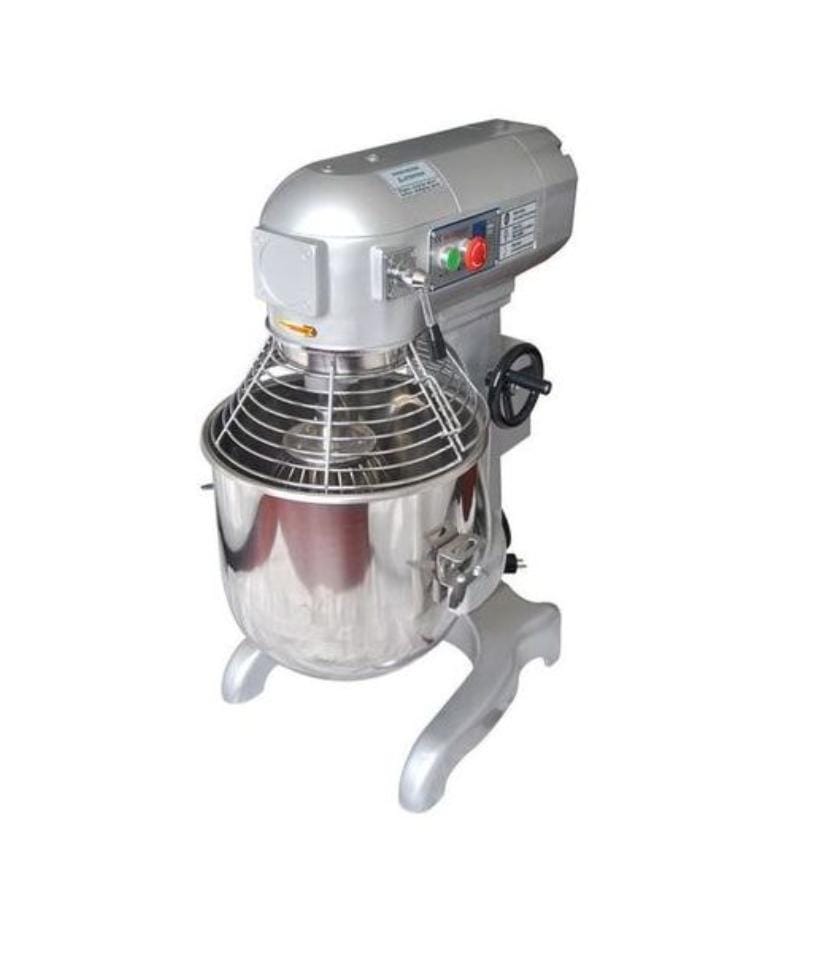
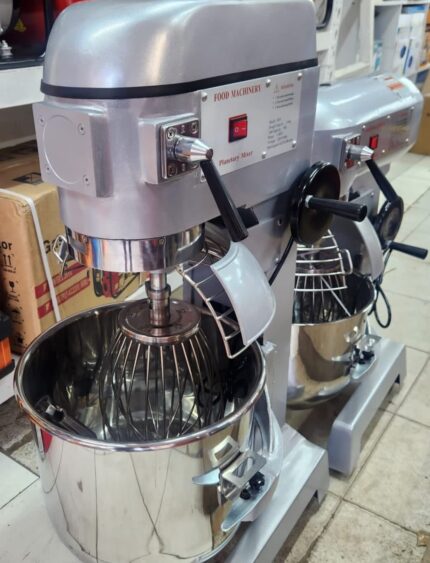
Heavy-Duty 30L Stainless Steel Dough Mixer
KSh74,499.00
| Feature | 30L Spiral Dough Mixer | 30L Planetary Food Mixer |
| Primary Use | Artisan breads, pizza crusts, mandazi, chapatis, and heavy pastry. | Cakes, muffins, whipped cream, royal icing, and occasional light doughs. |
| Action | Dual Rotation: The bowl turns and the spiral hook turns. This avoids friction heat, keeping the yeast alive and dough cool. | Orbital Rotation: The bowl is locked in place, and the attachment spins while traveling in a circle. |
| Standard Attachments | Fixed heavy-duty spiral dough hook & breaking bar. | 3 Interchangeable parts: Wire whisk, Flat batter paddle, and Dough hook. |
| Drive System | Usually Chain-driven or belt-driven for maximum torque. | Usually Gear-driven with 3 distinct speed settings. |
Upgrading to a 30L commercial dough mixer is a significant jump in production capacity, ideal for small-to-medium bakeries, busy pizzerias, and commercial catering kitchens.
At a 30-liter capacity, understanding the difference between a Spiral Mixer (for heavy bread/pizza) and a Planetary Mixer (for cakes, creams, and light doughs) becomes even more critical to prevent motor burnout.
1. 30L Capacity Breakdown (What it can hold)
A 30-liter bowl does not mean you can mix 30 kg of dough. The actual capacity depends on the style of mixer and the moisture content of your recipe:
-
Spiral Mixer (Dedicated Dough Mixer):
-
Dry Flour Capacity: Up to 12 kg to 15 kg of dry flour.
-
Finished Dough Yield: Up to 20 kg to 25 kg of total kneaded dough per batch.
-
-
Planetary Mixer (All-Purpose Mixer):
-
Dry Flour Capacity: Strictly capped around 6 kg to 8 kg of flour.
-
Finished Dough Yield: Maximum 10 kg to 12 kg of heavy dough. (Overloading a planetary mixer with heavy dough will quickly strip the internal gears).
-
2. Comparison: 30L Spiral vs. 30L Planetary
| Feature | 30L Spiral Dough Mixer | 30L Planetary Food Mixer |
| Primary Use | Artisan breads, pizza crusts, mandazi, chapatis, and heavy pastry. | Cakes, muffins, whipped cream, royal icing, and occasional light doughs. |
| Action | Dual Rotation: The bowl turns and the spiral hook turns. This avoids friction heat, keeping the yeast alive and dough cool. | Orbital Rotation: The bowl is locked in place, and the attachment spins while traveling in a circle. |
| Standard Attachments | Fixed heavy-duty spiral dough hook & breaking bar. | 3 Interchangeable parts: Wire whisk, Flat batter paddle, and Dough hook. |
| Drive System | Usually Chain-driven or belt-driven for maximum torque. | Usually Gear-driven with 3 distinct speed settings. |
3. Key Technical Specifications (30L Models)
-
Motor Power: Typically 1.5 kW to 2.2 kW (Approx. 2 to 3 Horsepower).
-
Power Requirements: Available in both Single Phase (220V–240V) for standard outlets and Three Phase (380V–415V) for heavy industrial setups. Always check your kitchen’s power grid before buying.
-
Build & Material: Food-grade 304 Stainless Steel for the bowl, safety cage, and mixing tools. The body is typically heavy cast iron or reinforced steel finished with anti-rust enamel.
-
Machine Weight: Roughly 90 kg to 130 kg. These units are floor-standing models and often come with built-in rubber feet or lockable wheels for stability.
4. Commercial Guardrails & Safety
-
Microswitch Interlock Safety Cage: The machine will automatically stop the moment the stainless steel safety grid is lifted.
-
Dual Speed Controls (For Spiral Mixers): Better models feature a low speed for blending ingredients and a high speed for developing the gluten structure in the dough.
-
Integrated Timers: Essential for commercial production lines, letting you set a 10-minute knead cycle and walk away to tend to ovens.
Reviews
There are no reviews yet.